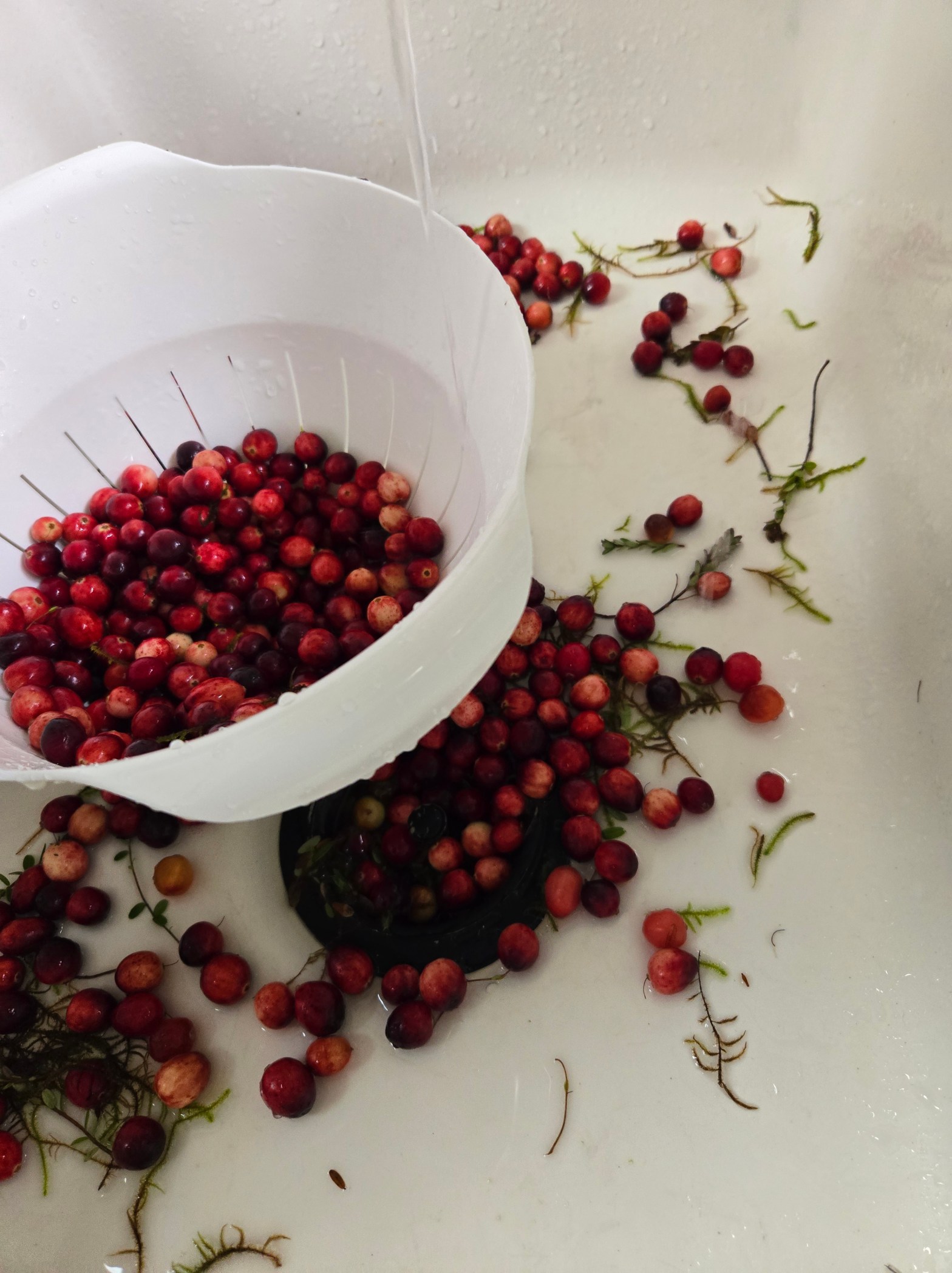
My cranberry sauce experiment
This is the recipe I put together after our cranberry-picking adventure. I wanted to experiment with agave, allulose, orange, and spices rather than use my usual recipe.
Yield: Approximately 5–6 pints (10–12 half-pints)
Ingredients
- 16 cups fresh cranberries, rinsed and sorted
- 2 cups water
- 2–2½ cups agave nectar
- ½ cup allulose
- 3 cinnamon sticks
- 1 whole clove
- 2 small oranges (juice from both, zest of one, plus all the squeezed remains)
- A splash of apple juice
What I Did
1. Cook the sauce
Grate the zest of one small orange into a large cooking pot. Cut both oranges in half and squeeze their juice into the pot. Add the leftover squeezed orange remains, including the peels and pulp.
Add the cranberries, water, agave nectar, allulose, cinnamon sticks, whole clove, and a splash of apple juice.
Bring the mixture to a rolling boil over medium-high heat, stirring frequently. Reduce the heat to a simmer and cook, stirring occasionally, until most of the cranberries have popped and the sauce begins to thicken.
Remove and discard the cinnamon sticks, whole clove, and large cooked orange remains.
2. Prepare the jars
I cleaned my canning jars and placed them in my water-bath canner to warm up.
3. Fill and process
I ladled the hot cranberry sauce into the warmed jars, leaving headspace. I wiped the rims with a clean, damp cloth, placed the lids on, and tightened the bands until fingertip-tight.
I lowered the jars into the canner, brought the water to a rolling boil, and processed them for 15 minutes. I then turned off the heat and let the jars sit in the hot water for another five minutes before removing them.
4. Cool and rest
I used a jar lifter to remove the jars and placed them upright on a towel or wooden cutting board in a draft-free spot. I left them undisturbed for 24 hours to cool and check the seals.
A Note About My Canning Experiment
These are the steps I personally followed. This modified recipe uses agave and allulose and has not been validated as a shelf-stable canning recipe using USDA-recommended procedures. The processing time I used should not be taken as a verified safe processing time for this recipe.
A sealed jar does not establish that food is safe for room-temperature storage. This post documents my experiment; it does not certify the method as safe. For storage, refrigerate or freeze the sauce unless you use a validated preservation recipe and its specified ingredients and processing instructions.

